“Pain into Purpose”Grieving aunts, mothers organize against street violence
On Sept. 2 of 2010, Monalisa Smith’s life began to shift. Her nephew Eric was shot in Dorchester. His body lay in the street for two hours just past midnight before the 18 year old was pronounced dead on the scene.
Working through her pain, Smith found solace amongst other community members going through a similar experience. Grief would soon morph into nightly gatherings within the basement of the Deliverance Temple Worship Center.
The small white building at 232 Columbia Road became a meeting spot for grieving those lost, and ultimately, the birthplace of Mothers for Justice and Equality (MJE). The nonprofit offers support to those affected by street and gun violence, now operating out of two locations in the Boston area.
With over 4,500 clients served annually and a staff of 19, MJE provides free programs including workforce development and career readiness workshops, a youth empowerment program, and family support services, where those dealing with housing issues or food insecurity can turn to for help.
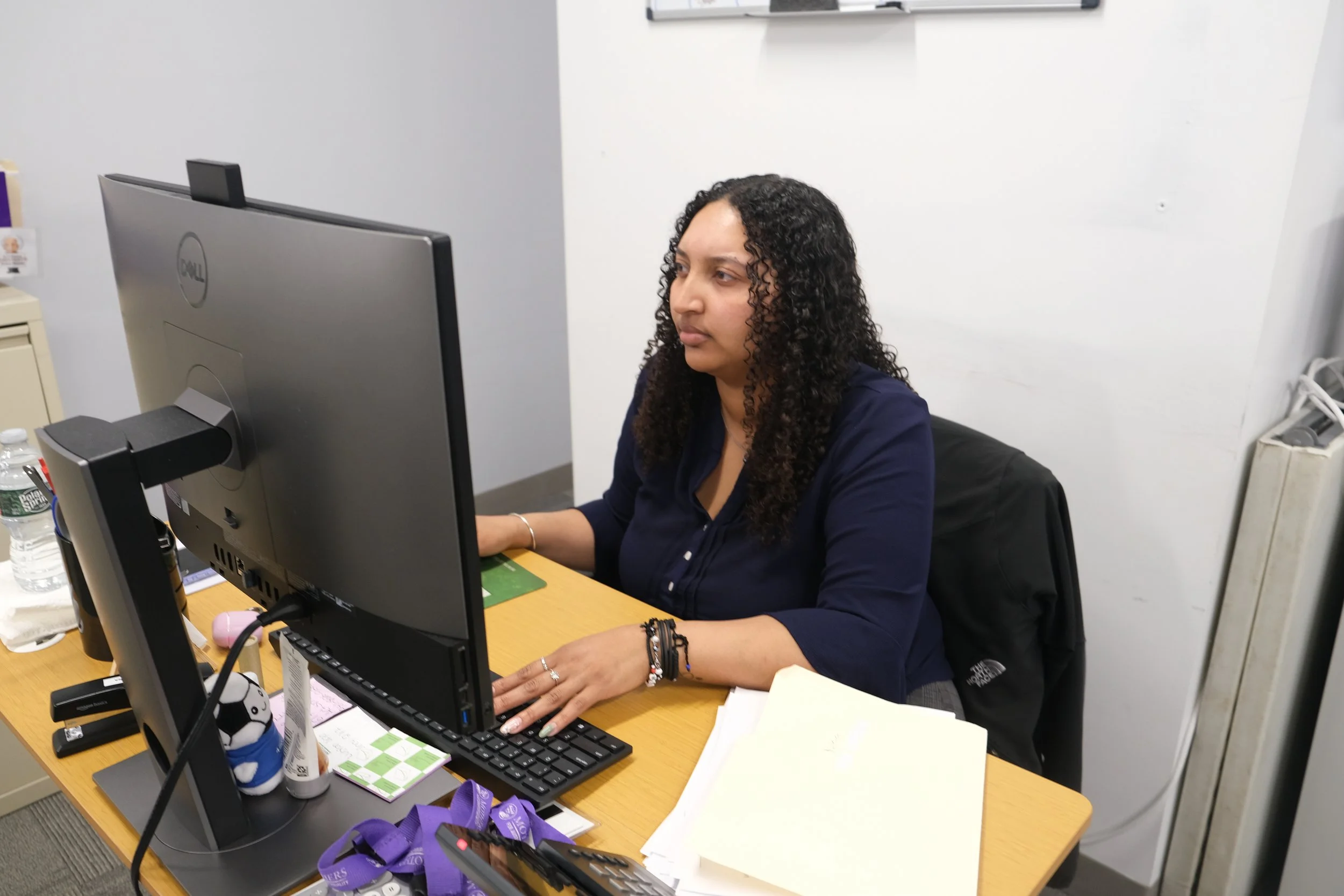
Office manager, Melisa De Pina working a her desk located at the MJE Roxbury location.
As gun violence continues to spur headlines across the country, what remains underreported is the disparities experienced by communities of color. According to the Massachusetts Coalition to Prevent Gun Violence, Black men account for more than half of all gun homicide victims nationally, despite making up 7% of the population. More than half of all gun violence incidents in Boston happen amongst 3% of the city’s streets.
Eric Smith was an aspiring artist with a love for drawing. Before his death that year, Monalisa served as director of community investments at Citizens Bank. With kind eyes and a smile that engulfed her face, Smith used her welcoming presence to her advantage while helping organizations secure resources needed to bring their visions to life.
With his death, a flood of grief affected his family. They are among the one in three Black people who know or care about someone who has been a victim to gun violence. In neighborhoods like Dorchester, where about 73% of residents are of color and between a third and a half identify as African American, that statistic carries an unthinkable weight.
Smith explained the difficulty of balancing pain while simultaneously feeling as though the police were treating victims, like her nephew, as perpetrators.
“The police, they were victimizing the victim, right?” Smith said in disbelief, her face upturned, eyes cast up towards the ceiling.
When a community is faced with the shockwaves of gun violence so often, desensitization sets in. Victims’ families are often forgotten as new murders are brought to the forefront.
According to Everytown for Gun Safety, amongst Black survivors, 57% experience trauma from the incident. Six months following a death, 50% of them don’t have access to mental health services that aid in dealing with long term impacts of trauma.
MJE found a way to fill that gap through community. In the early phases, meetings rotated. Eileen Paterson, who currently serves as clerk and secretary on the board of directors, recalled when meetings were held in her own living room.
Paterson first heard of MJE in 2011 when she had met Smith through a mutual friend. At first she had been hesitant, but Smith remained determined and eventually convinced her to attend one of their empowerment breakfasts.
Paterson was grieving the loss of her grandson.
Devonté Franklin was 16 years old with a love for marine life and a knack for music.
“He would make his own music off of a computer keyboard, pots, pans, put it together, just making the sound,” said his mother Aretha Maugé as she recalled her son's creativity with a fond smile.
According to the CDC youth and young adults are disproportionately impacted by violence in their communities. For youth ages 10 to 24, homicide is the second leading cause of death, with communities of Black, Native American, and Hispanic people experiencing the highest rates of homicide.
On Dec. 31 2008, Franklin boarded the route 28 bus to go to his grandmother's house. He was stabbed multiple times. Franklin never made it to his grandmothers, and died at the hospital.
Following his death, Maugé struggled at her then position as an administrative assistant at Tufts medical. Usually known for her welcoming and talkative personality, she quickly became rather withdrawn and quiet, stating that the space lacked the resources she needed at the time to continue to thrive in that environment.
As she continued to struggle with her own grief, her mother, Paterson, urged her to come and join some of the MJE meetings in hopes it would help. Attending empowerment breakfasts, Maugé began to find comfort amongst others who understood the pain she was going through.
After being fired from her role at Tufts, Maugé found herself going down a different path as she began to volunteer at MJE. This later turned into a role on staff as senior outreach coordinator.
Stepping into a position that allowed her to utilize her communicative skills, she has helped form workshops, and done tabling throughout the community to connect families to resources.
Her work also evolved into public advocacy in the name of her son. Determined to lessen the chances of others facing the same fate, Maugé succeeded in advocating for increased fines for selling knives to minors, from $30 to $300, and increased security cameras on the route 28 bus. Due to the lack of security cameras in 2008, Devonté’s killer remains on the streets.
“MJE means healing, support and purpose. When my family went through such a painful loss, we didn’t know where to turn,” said Paterson. “We turned to MJE because it's a safe place where we could grieve, grow and begin to heal.”
Maugé recalled the way that Smith had pushed her to use her strengths from the beginning, providing the space for her to speak and open up to others. Her own transformation of turning pain into purpose encompassed exactly what Smith envisioned.
“How are we going to move this grief into a place of sustainability? So that a mother who lost her child, that sibling who was caring for the family because the mother had become unable to do so, could figure out how they were going to move forward?” said Smith.
She was tired of seeing so many cast aside, expected to simply overcome the grief of their children. Left without resources and navigating mental health issues alone, many women often turn to alcohol and substance abuse.
Juggling between her role at Citizens and what was clearly beginning to mold into something special, in 2012, Smith left her role to begin full time work as the founder and executive of Mother’s for Justice and Equality.
With a mission to “end neighborhood violence through empowering mothers and youth to become catalysts for change” MJE transformed from aiding mothers with a space to grieve, to forming a structure meant to cultivate success from despair.
Operating with an annual budget of $3 million, MJE recieves grants from the government and philanthropic partnerships with Citizens Bank and a number of private donors. Providing a number of resources to assist with food insecurity, housing, mental health, workforce and career development, MJE serves families as whole units.
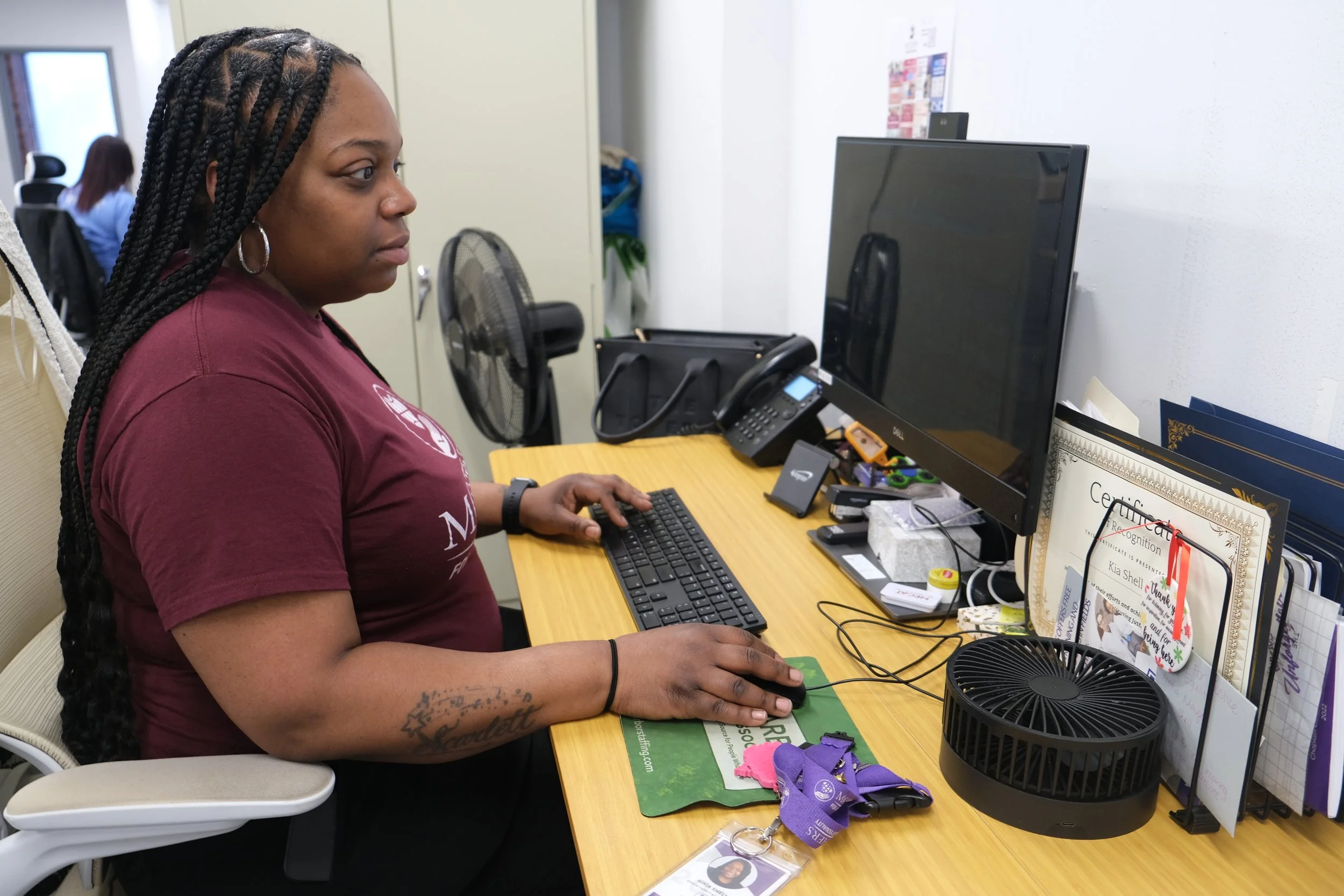
Nikia Shell, Senior Family Advocate at MJE working at her desk at their Roxbury location.
Nikia Shell was born and raised in Boston, with Dorchester being where she calls home. Similar to others from her community, Shell lost a number of loved ones to gun violence, including her best friend, Felicity Coleman.
“She was shot and killed on the Fourth of July. Innocent bystander, senseless argument over fireworks and she just happened to be outside, trying to enjoy herself,” said Shell. “That was in 2020, right before I started working at MJE.”
Still grieving the loss of friends to street violence, Shell was aligned with MJE’s mission to end it. In 2022 she served as an intern for about eight months before being hired as a program coordinator.
In this role, she took on the responsibility of their reentry program “Stronger Communities,” which aids people returning from incarceration, helping them move “from instability to stability.”
From there she was promoted to family advocate, her focus shifting to low-income single mothers through case management, training programs, and trauma informed workshops.
Today she holds the position of senior family advocate. Handling a case load of about 40 clients a week, Shell is often the first point of contact with grieving families in need of food and housing.
These families have backgrounds interchangeable with her own: reared in the same neighborhoods, catastrophically changed by friends and family taken too soon. “Sometimes you can get very involved in the work that you’re doing,” she said, describing the work as something between gratitude and satisfaction.
“It was just like a blessing. To be in a space with those kinds of people knowing they were dealing with the same kind of things that I dealt with in the past,” she said.
MJE utilizes 90-day action plans, with the hopes that any client that comes through their doors can have their needs be met within that time frame.
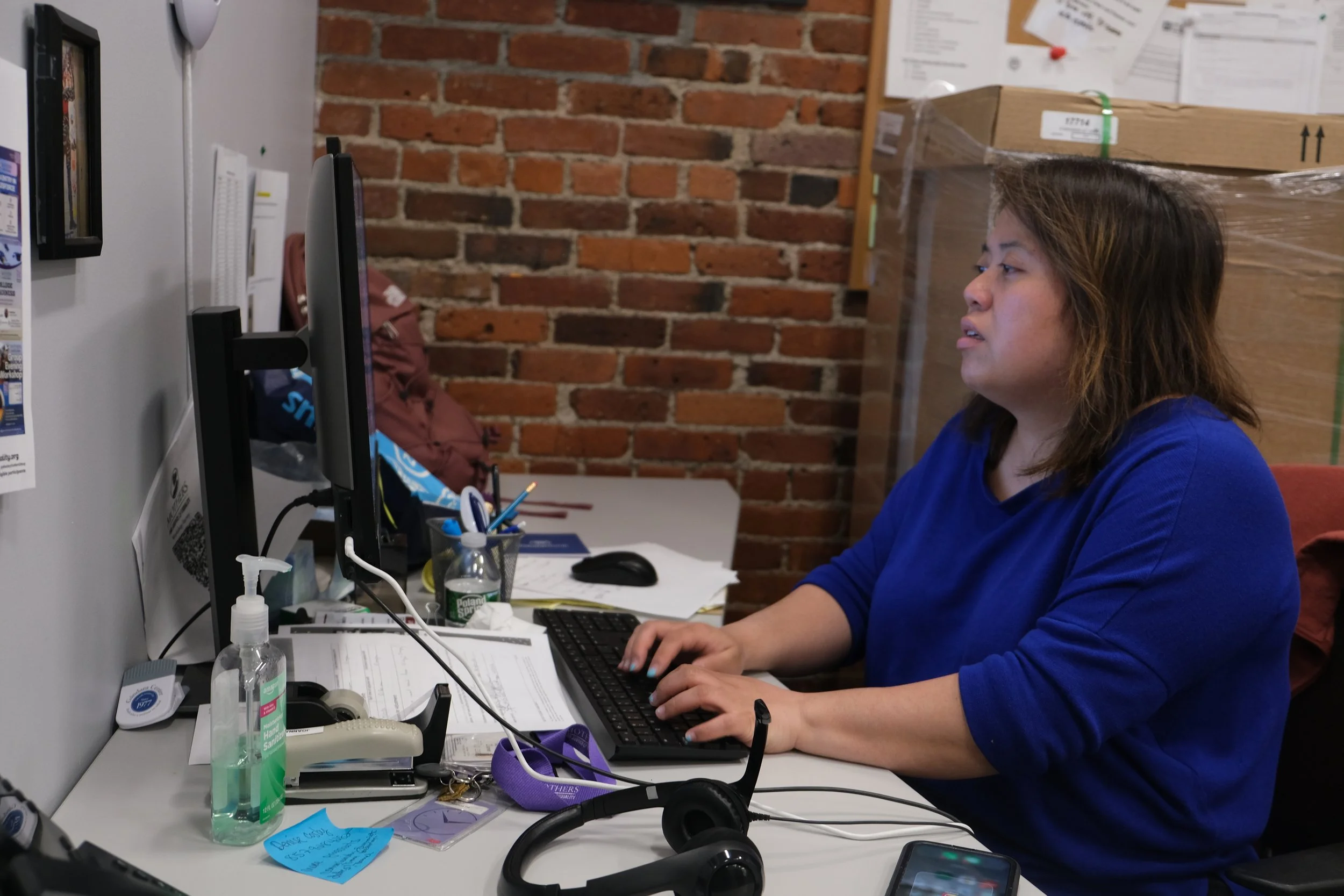
Joanna Yu, director of operations, working a her desk at the MJE Roxbury location.
But with differing needs, Shell recognizes that there is no time limit on grief and how it can affect someone. Her focus is instead on leading those who are stuck in a moment of isolation and vulnerability into resilience, cultivating a community along the way.
Through creating trauma-informed spaces MJE is able to provide the space for clients to heal, while at the same time creating empowerment workshops, art workshops, and opening the space for community conversations.
Shell smiled as she recalled her clients over the years and the unique privilege of getting to watch them transform an uncertain beginning into feelings of belonging. They navigated through shame, judgement and isolation, ultimately making lasting friends over dozens of meetings and carpools.
MJE emphasizes the importance of not letting grief be a defining characteristic, but rather a catalyst to become their better selves.
Dr. Issac Yablo, senior advisor for community safety within the mayor's office, has had the opportunity to work with and witness the work MJE provides for the community.
“Their ability to remain as a local leader, but then also a national influence is amazing,” he said.
Within Boston’s support and safety ecosystem, MJE’s approach to street violence and supporting survivors in the aftermath of loss is what separates them from similar advocacy groups who focus on policy change, and public awareness but may not necesarilly have the same support for families after the fact.
But Yablo explained that it’s not always enough to have lived experience. That can help build trust and credibility, but MJE combines that experience with data and evidence on what works in order to build successful programming.
MJE’s roots run deep within Boston, and are spreading throughout the nation. Their annual Mothers Against Violence conference brings together women from across the country. They carry the memories and photos of lost loved ones, sharing the advocacy they have started within their own communities.
“What they’re doing by transforming the pain into the purpose and helping individuals become mentors and advocates and caregivers – that is really what's amazing here,” said Yablo.
MJE partners with a number of organizations such as Boston Public Schools, Brigham and Women’s Hospital, and the Boston Public Health Commission in order to ensure their reach never dwindles and that they can refer families with specific needs to partners.
“We bring that resource to them,” said Annis Gill-Miller, the director of program services at MJE.
Moving from North Carolina to Boston over 30 years ago, Gill-Miller has worked in financial services but also has “a heart to serve.” Being able to work with first generation youth – that journey of reclaiming power, and becoming independent, successful individuals and then stronger families – is what matters most for her.
The work is not easy, holding space for others’ trauma while finding ways to steer through it. Gill-Miller realized, too, that it’s critical to ensure her team has the support they need.
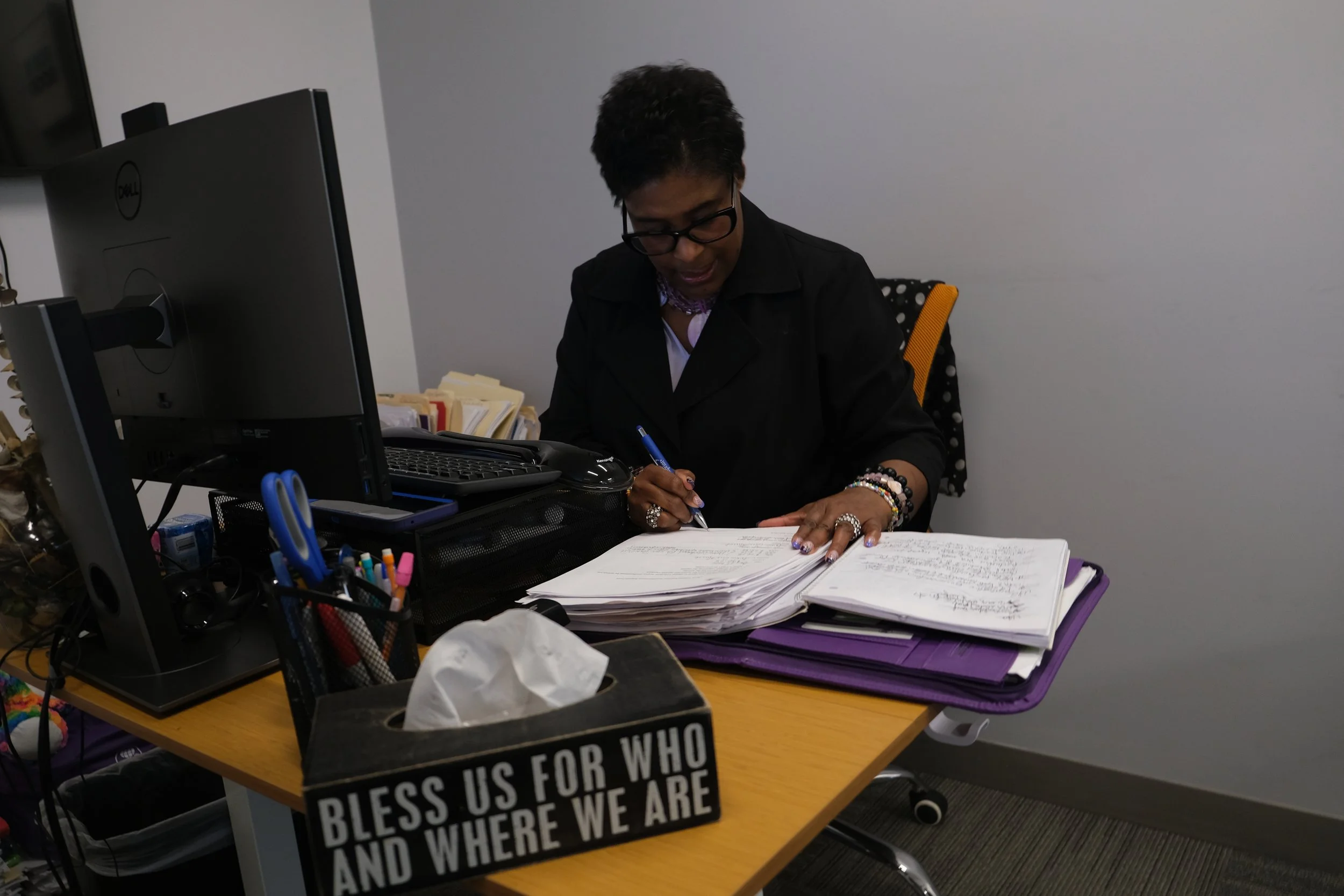
Annis Gill-Miller, director of operations working at her desk located at MJE’s Roxbury location.
“We have to support each other and have the benefits and services that are available for us so that we can have a sense of levity,” she said.
MJE continues to provide for those in the community, a living testament to what Smith had envisioned over a decade ago when she was faced with loss and without a proper space to turn to.
“It's a good thing when we can share our life with someone else and see other people heal as a result of that and earn and live,” Smith said. “You feel like you’ve done some good in this world.”